
You still go through the motions. You pray — or try to. You read your Bible, attend church, say the right words. But inside, something has hollowed out. The faith you once felt so deeply now feels like a shell, going through motions that used to mean something and no longer seem to. If you are there right now, you are not as alone as you feel.
The experience of faith feeling empty — of the warmth and conviction and sense of connection that once made Christian life feel alive having receded into something flat and performative — is one of the most painful and least discussed experiences in the church. We have a culture that celebrates testimony and transformation, that values confidence and certainty, that makes it difficult to admit: I believe, but it doesn't feel like anything right now.
This article is for people who are honest enough to name that experience. It does not offer quick fixes. It offers honest engagement with a real and important spiritual experience, pastoral reflection on what it might mean, and practical guidance for navigating it with integrity.
The Difference Between Feeling and Reality
The first and perhaps most important thing to say about faith that feels empty is this: the feeling of emptiness is not the same as the reality of emptiness. Our feelings are real, and they matter, and they deserve to be taken seriously. But they are not always reliable guides to what is actually true about our spiritual state or about God's engagement with us.
Think about how emotions work in human relationships. A marriage that has been deep and genuine for decades does not cease to be real because one partner is going through a season of emotional flatness. A friendship built on years of shared experience and genuine love does not evaporate because one friend is depressed and cannot currently feel the warmth of the relationship. The reality and the feeling are two different things. The same is true in our relationship with God.
This is not a counsel to deny your experience or to pretend it isn't happening. It is an invitation to hold your experience of emptiness alongside the larger truth of who God is and what He has committed Himself to in your life. Those two things can coexist. The emptiness you feel is real. And it is not the final word.
Why Faith Sometimes Feels Empty
Spiritual Dryness and the Withdrawal of Consolation
As we explore throughout this series, seasons of spiritual dryness — during which the felt sense of God's presence, the emotional warmth of worship, and the experiential aliveness of prayer all seem to diminish — are normal features of the Christian life. The great mystics and contemplatives of the church, from Augustine to Teresa of Avila to Thomas Merton, all described these seasons. The dark night of the soul, as John of the Cross analyzed it, is precisely this: the withdrawal of consolation in service of a deeper purification and a more mature faith.
When faith feels empty, it may be that God is weaning you from a dependence on spiritual feelings in order to develop a faith that does not require them. This is not a comfortable process. But it is one that virtually every deeply mature believer has undergone, and it consistently produces a faith that is more rooted, more resilient, and more genuinely God-centered than the faith that preceded it.
The Emotional Weight of Life's Challenges
Sometimes faith feels empty not because of a specific spiritual dynamic but because of the cumulative weight of life's difficulties. Grief, exhaustion, relational pain, vocational frustration, chronic illness, trauma — these things press on the soul and can squeeze out the experiential vitality of faith. When every emotional and psychological resource is being consumed by the demands of a difficult life, there may simply be very little left over for the warmth and aliveness that we associate with vibrant faith.
This is not a spiritual failure — it is a human reality. Our faith is embedded in our whole selves, including our emotional, physical, and relational selves. When those selves are suffering, faith suffers too — not in the sense of ceasing to be real, but in the sense of losing its experiential brightness. Pastoral gentleness toward yourself in these seasons is not spiritual weakness. It is wisdom.
Doubt and Its Relationship to Feeling
Sometimes faith feels empty because we are genuinely struggling with intellectual or existential doubt. Questions about God's existence, about the reliability of Scripture, about the problem of suffering, about the exclusive claims of Christianity — these questions are real, and they deserve honest engagement rather than dismissal. When they go unaddressed, they can create an interior distance that numbs the feeling of faith even while the external practices continue.
Honest doubt, brought to God and to trusted thinkers and communities, is not the enemy of faith — it can be the beginning of a deeper and more examined faith. The great Christian intellectual tradition has engaged seriously with these questions for two millennia, and there is rich nourishment available for those willing to do the intellectual work of faith alongside the devotional work. If unresolved doubt is contributing to your experience of emptiness, naming it and beginning to engage it is an important step.
What Empty Faith Is Still Doing
Here is something that may sound surprising: faith that feels empty is still doing something. It is still orienting you toward God, even when the orientation produces no feeling. It is still keeping you in the community of believers, even when community offers little warmth. It is still carrying you through the practices of prayer and Scripture and worship, even when those practices feel hollow.
This kind of faithfulness — showing up without reward, continuing without confirmation — is actually a profound form of love. Jesus told His disciples that those who loved Him would keep His commandments (John 14:15) — not those who felt the right feelings about Him. The theology of the cross is fundamentally a theology of faithfulness in the absence of felt reward. Jesus did not feel the presence of the Father when He cried out from the cross — and yet He did not abandon His mission. His faithfulness in the darkness is both the model and the foundation of ours.
Empty faith is not dead faith. It is faith in the desert, still walking toward the promised land even when it cannot see it. And the desert, in the biblical story, is where some of the most profound encounters with God occur.
Honest Practices for Seasons of Emptiness
When faith feels empty, here are some practices that many believers have found genuinely sustaining — not as techniques to force feeling back, but as ways of remaining faithfully available to God through the emptiness.
Practice honest prayer. Tell God exactly what you are experiencing. "Lord, I feel nothing. My faith feels empty and I don't know what to do with that." This kind of raw honesty is modeled throughout the Psalms and is far more valuable than performed piety that doesn't reflect your actual interior state.
Lower the bar for what counts as faithfulness. In seasons of emptiness, showing up at all is an act of faithfulness. Getting out of bed and opening your Bible even when you expect nothing from it is faithfulness. Sitting in a church service without feeling anything is faithfulness. Don't measure your spiritual health by how alive your faith feels. Measure it by whether you are still seeking.
Seek honest community. Find at least one person — a pastor, a trusted friend, a spiritual director — with whom you can be completely honest about what you are experiencing. Isolation amplifies the sense of emptiness. Being known, and continuing to seek God in the company of others who are also seeking Him, can sustain you through seasons when your individual faith cannot sustain itself.
Turn outward in service. One of the paradoxes of the empty season is that serving others — especially those who are suffering — can quietly rekindle something in a faith that has gone cold. Not because service produces feelings, but because stepping outside your own spiritual struggle into the genuine needs of others can create the kind of perspective and meaning that dry, inward-focused prayer sometimes cannot.
The Promise at the Other Side
Every believer who has written honestly about seasons of empty faith — and there are many, across every era and tradition of the church — has described the same pattern: eventually, the season ends. Not always quickly. Not always comfortably. But it ends. And what is on the other side is consistently described as a faith that is deeper, more spacious, more genuinely God-centered, and less dependent on the variable currency of spiritual feeling.
Augustine of Hippo, whose restless and anguished search for God culminated in his famous cry, "Our heart is restless until it rests in You," lived through long seasons of spiritual emptiness. Thomas Merton described the darkness that preceded his deepest experiences of God's presence. The pattern is real, and it is not accidental. The emptiness is the container that is being enlarged so that more of God can fill it.
Related Reading
→ Why Does God Feel Silent? (Hub Article)
→ The Dark Night of the Soul Explained
→ How Silence Can Strengthen Faith
→ What to Do When You Can't Hear God Anymore
Frequently Asked Questions
Is it normal for faith to feel empty?
Yes — far more normal than most people realize, because the church tends not to talk about it openly. Virtually every serious Christian believer who has written honestly about their interior life has described seasons of spiritual emptiness. It is a normal feature of the mature spiritual life, not a sign of failure or weakness.
Should I stop going to church if my faith feels empty?
Staying connected to the community of faith is generally the better path, even when it offers no warmth. The temptation to withdraw is understandable, but isolation typically deepens the emptiness rather than resolving it. The body of Christ can carry you through seasons when you cannot carry yourself. If your current community is adding to rather than alleviating your struggle, it may be worth finding a different community — but not withdrawing from community altogether.
What is the difference between empty faith and losing faith?
Empty faith is still faith — still oriented toward God, still maintaining the practices and posture of seeking, even without emotional confirmation. Losing faith involves a fundamental turning away or abandonment — a choice, often accompanied by intellectual rejection of core beliefs. Many people who feel they are losing faith are actually in a season of spiritual dryness that will ultimately deepen rather than destroy their faith. The key question is not how your faith feels but whether you are still seeking.
Can therapy help when faith feels empty?
Yes, particularly if the emptiness has a significant emotional or psychological component. A therapist who understands faith and spirituality can help you identify psychological factors — depression, anxiety, unresolved grief, trauma — that may be contributing to or intensifying the experience of spiritual emptiness. Therapy is not a substitute for spiritual direction, but the two can be powerfully complementary.
How do I talk to my pastor about feeling spiritually empty?
Most pastors have experienced this themselves and are well-equipped to receive honest disclosures of spiritual dryness. A simple, honest opening works best: "I've been going through a season where my faith feels very flat and empty, and I'm not sure what to make of it. Could we talk?" You do not need to have it figured out before you bring it to a pastor. The conversation itself is part of the navigation.
At The Wandering Home, we believe that honest faith — even empty, struggling faith — is more pleasing to God than polished performance. You are welcome here, exactly where you are.
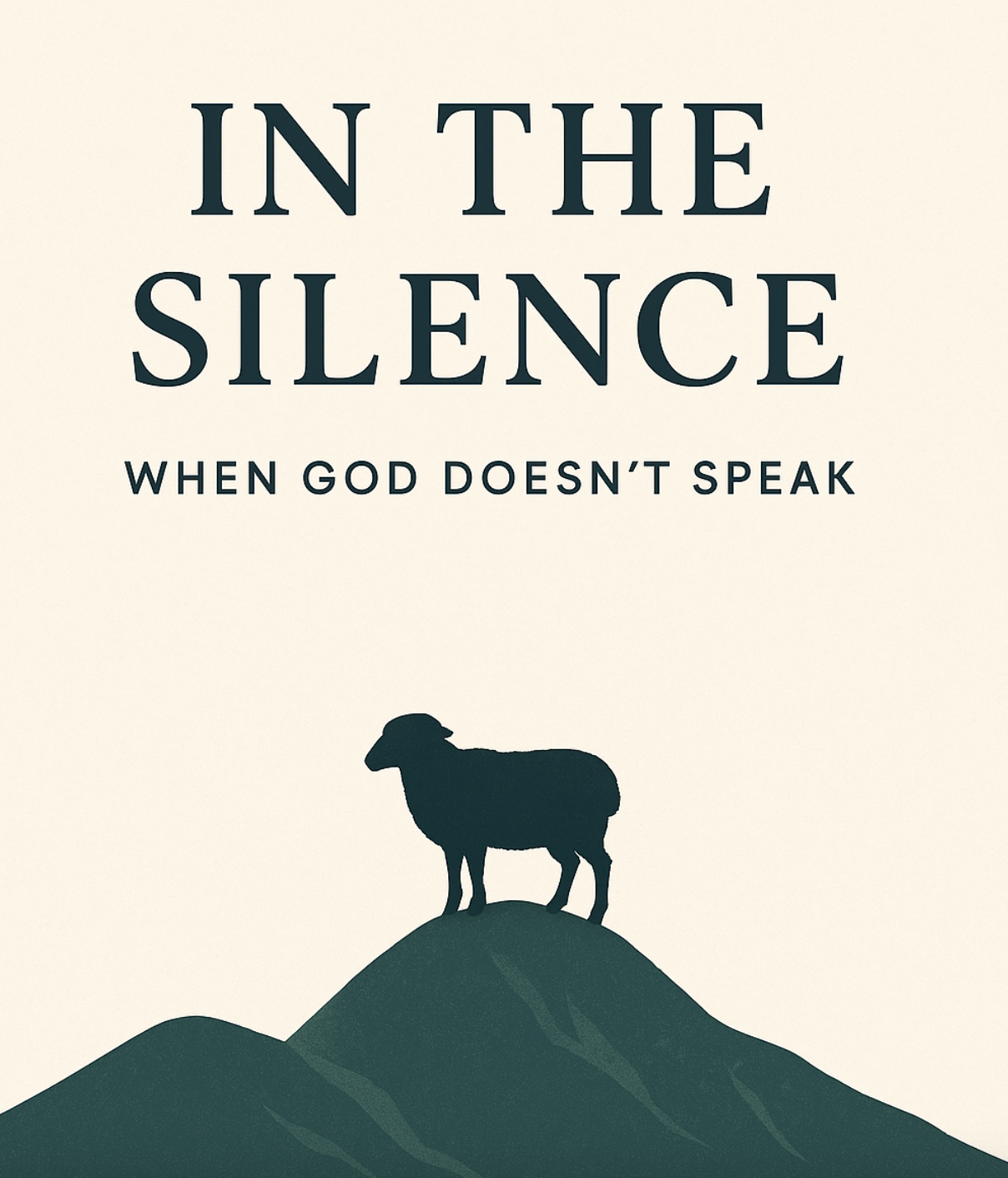
What do you do when God goes quiet?
Many believers experience seasons where prayers feel unanswered and heaven feels silent. In the Silence: When God Doesn’t Speak explores those moments honestly—through Scripture, story, and the journey of faith after failure.
If you’ve ever wondered where God is in the quiet, this book is for you.
