
The title of this article may feel counterintuitive — even offensive — if you are currently in a season of painful divine silence. How can silence strengthen faith? It doesn't feel like strengthening. It feels like losing.
But the witness of Scripture, the testimony of the saints across the centuries, and the lived experience of countless believers converge on a surprising and important truth: the seasons of divine silence, when navigated with honesty and perseverance, consistently produce a faith that is deeper, more resilient, and more genuinely God-centered than the faith that existed before them. The silence is hard. And it is, in the hands of a wise and loving God, formative.
This article explores how that formation actually works — the specific ways in which divine silence strengthens the faith of those who remain faithful within it. It is written not to minimize the pain of the silent season but to offer a theological and pastoral frame that might make the pain more bearable and more meaningful.
Silence Strips Faith Down to Its Essentials
One of the first things that divine silence does is reveal what our faith is actually made of. When the feelings are present — the warmth of worship, the sense of God's nearness in prayer, the emotional vitality of Scripture — it is easy to confuse our faith with our experience of faith. We think we trust God because trusting God currently feels good, or at least feels like something. When the feelings depart, we discover what the foundation of our trust actually is.
This stripping is initially alarming. Without the emotional warmth, we may feel as though our faith is collapsing. But what is actually collapsing is not faith itself but its experiential superstructure — the layer of feeling and sensation that was built on top of the real foundation. And when that layer is removed, we discover — sometimes to our own surprise — that there is something underneath. We are still showing up. We are still seeking. We are still refusing to simply walk away. This persistence without reward is bare faith, and it is actually more durable than the emotionally padded version.
The Psalms model this movement beautifully. Psalm after psalm moves through lament and apparent absence to arrive at a declaration of trust that is not based on changed circumstances but on the remembered character of God. "Though he slay me, yet will I hope in him," says Job (Job 13:15). This is faith at its most fundamental — stripped of everything except the commitment to orient toward God regardless of what is returned.
Silence Teaches Us to Distinguish God From His Gifts
There is a subtle but significant spiritual danger in a faith that is always emotionally alive and experientially rewarding: we can gradually begin to love the experience more than the God who gives it. The warmth of prayer, the excitement of spiritual discovery, the feeling of God's presence — these are genuine goods and real gifts. But when they become our primary reason for seeking God, we have subtly shifted from seeking God to seeking spiritual experience, and we have invited a form of spiritual consumerism into our life of faith.
Divine silence can interrupt this pattern with surgical precision. When the gifts are withdrawn, we discover whether we are seeking the Giver or the gifts. If our primary motivation in faith was the experiential rewards, the silence will tend to produce disengagement — why continue if there is nothing to receive? But if our orientation toward God is genuine — if we love Him and not just what He provides — then the silence, while painful, will not ultimately extinguish the seeking. The silence clarifies our loves and, in doing so, purifies them.
This is what the mystics described as the purification of intention — the gradual freeing of our love for God from entanglement with self-interested motivations. We come to seek God for Himself rather than for what He gives us, and this is a more mature and more authentic form of love. The silence is the teacher of this lesson, and no more comfortable classroom could produce the same depth of learning.
Silence Develops the Muscle of Perseverance
The New Testament has a great deal to say about perseverance — the capacity to continue in faith through difficulty, disappointment, and opposition. James says that the testing of faith produces perseverance (James 1:3). Paul celebrates the character that is formed through suffering and patient endurance (Romans 5:3-4). The writer of Hebrews calls believers to "run with perseverance the race marked out for us" (Hebrews 12:1), pointing to the great cloud of witnesses who did exactly this.
Perseverance is not a quality that can be developed in comfortable circumstances. It is, by definition, the capacity to continue when continuing is hard. And the seasons of divine silence are among the most powerful opportunities for its development, because they require the believer to continue seeking and trusting in the absence of experiential confirmation that doing so is worthwhile.
Every morning that you open your Bible when it offers no warmth, every prayer you offer when it seems to produce nothing, every Sunday morning you show up at church when worship leaves you cold — these are acts of perseverance that are building something. They are forming a faith that does not depend on immediate experiential return, that does not require constant validation to sustain its commitment. This kind of faith is precisely what the long haul of the Christian life, and the challenges of witnessing to the gospel in a resistant world, requires.
Silence Opens Us to Encounter on God's Terms
One of the most consistent patterns in the Bible is that God's most significant encounters with His people occur in unexpected ways, at unexpected times, through unexpected means. Moses encounters God not in the temple but in a bush on a hillside. Elijah encounters God not in the wind or the earthquake or the fire but in the still small voice. Mary encounters the risen Jesus in what she initially mistakes as an encounter with the gardener.
When the silence has emptied us of our expectations — our convictions about how God should speak and when and in what form — we become more open to the unexpected forms of His presence and communication. The silence, in stripping us of our spiritual preconceptions, actually widens our receptivity. We learn to look for God in places we had not previously been looking: in creation, in the words of a stranger, in an unexpected piece of music, in the quiet of early morning, in the care of someone who serves us when we cannot serve ourselves.
This openness to encounter on God's terms rather than our own is itself a spiritual maturation. It is a movement from the faith of the child — who expects God to show up in the familiar, expected forms — to the faith of the adult — who has learned that God is larger than any single form, and who has developed the attentiveness and openness to recognize Him in a wider range of His expressions.
Silence Connects Us to the Great Cloud of Witnesses
One of the unexpected gifts of seasons of divine silence is the profound sense of solidarity they can generate with believers across the ages. When you read the lament psalms and recognize your own experience in David's cry of desolation, you are joined to a community that spans three thousand years. When you read Teresa of Avila's descriptions of years of spiritual aridity, or Thomas Merton's dark nights of bewilderment, or Mother Teresa's decades of interior silence, you realize that you are walking a well-worn path.
This solidarity is not trivial. The loneliness of the silent season — the sense of being uniquely abandoned or uniquely failed — is one of its most painful features. Discovering that you are part of a vast community of believers who have walked this same road, and who emerged from it with a faith deepened and enriched rather than destroyed, can be one of the most sustaining discoveries of the difficult season. You are not alone. You are not an anomaly. You are walking in the footsteps of some of the greatest believers who have ever lived.
Silence Ends
And finally — the silence ends. This is not a guarantee of timing. It is not a promise that the silence will end when you want it to or in the way you expect. But the consistent witness of Scripture and of Christian spiritual biography is that God breaks His silences. Job encountered God in the whirlwind. The disciples experienced Pentecost. The church of every age has testified to seasons of renewal and revival and restored intimacy following the desert.
The faith that emerges on the other side of a season of silence is consistently described by those who have lived it as more precious, more resilient, and more genuinely grounded in God Himself than the faith that preceded it. The silence was not the end of the story. It was the chapter that made everything that followed richer and more real.
Hold on. The morning comes.
Related Reading
→ Why Does God Feel Silent? (Hub Article)
→ The Dark Night of the Soul Explained
→ When God Is Quiet but Still Present
Frequently Asked Questions
Is it really possible for silence to strengthen faith, or is this just a way to make suffering feel meaningful?
The claim is not that suffering is good in itself or that divine silence is pleasant. It is that a wise and loving God can use difficult seasons — including seasons of felt absence — to accomplish genuine formation in believers who remain faithful within them. This is the consistent testimony of Scripture, the saints, and the lived experience of many believers. It does not minimize the pain of the silence; it offers a theological context in which that pain can be held with hope rather than despair.
What if the silence has left me with weaker faith, not stronger?
Not everyone navigates a season of silence in ways that allow it to be formative. Bitterness, isolation, and the gradual abandonment of seeking can mean that the potential for growth is not realized. If you feel that a season of silence has weakened rather than strengthened your faith, it is worth seeking pastoral care and honest spiritual conversation. It is never too late to re-engage with God and with the community of faith, and the God who led you into the silence is still seeking you.
How do I maintain hope during a long season of silence?
Several practices can sustain hope during extended silence: returning regularly to the testimonies of God's faithfulness in your past and in Scripture; reading the accounts of saints who navigated similar seasons; remaining connected to community; practicing honest lament rather than performed optimism; and holding lightly to a long-term perspective rather than measuring God's faithfulness by any single difficult season.
Can I trust that God is using the silence for good?
Faith asserts this trust even when experience does not confirm it. Romans 8:28 promises that God works all things together for good for those who love Him and are called according to His purpose. The silence is not excluded from "all things." Trusting this promise in the midst of the silence is an act of faith rather than of knowledge — and it is exactly the kind of faith that the silence is developing in you.
What is the most important thing to do to allow silence to strengthen rather than damage my faith?
Continue seeking. Whatever else you do or don't do, whatever you feel or don't feel, continue to orient yourself toward God. Keep showing up in prayer, however brief and honest. Keep reading Scripture, however flat it feels. Keep connecting with the body of Christ, however little warmth it offers. This continued orientation, maintained through the silence, is both the key practice of faith in the desert season and the primary means by which the silence does its deepening work.
At The Wandering Home, we write for pilgrims who are in it for the long haul. If this article has spoken to you, explore our full series on divine silence and spiritual dryness — and know that many have walked this road before you and found God faithful on the other side.
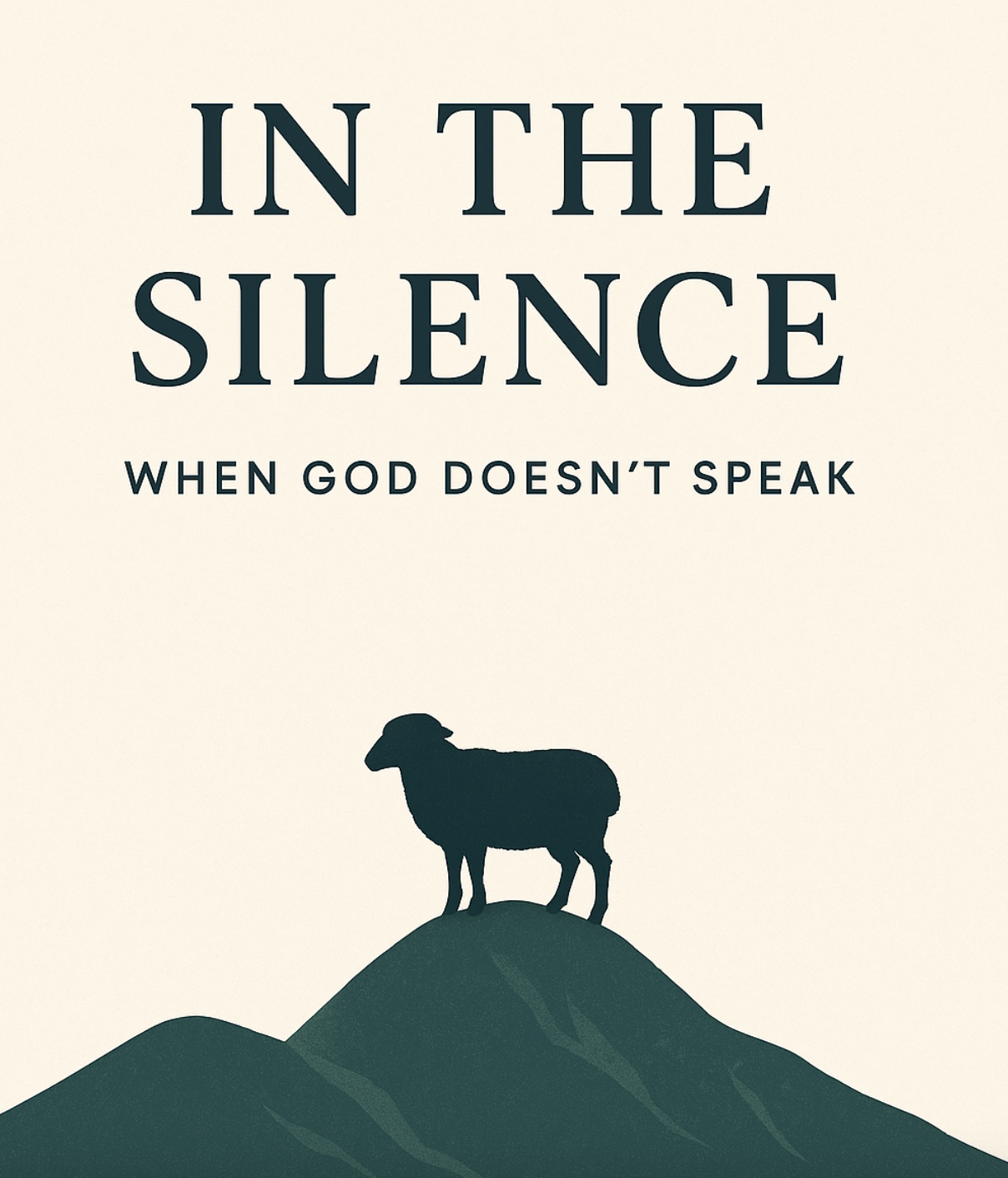
What do you do when God goes quiet?
Many believers experience seasons where prayers feel unanswered and heaven feels silent. In the Silence: When God Doesn’t Speak explores those moments honestly—through Scripture, story, and the journey of faith after failure.
If you’ve ever wondered where God is in the quiet, this book is for you.
