
Few phrases in the Christian spiritual vocabulary carry more weight — or more misunderstanding — than "the dark night of the soul." It has entered popular culture as a general term for any period of intense suffering or existential crisis. But in its original meaning, rooted in the work of the 16th-century Spanish mystic John of the Cross, it describes something far more specific, and far more theologically rich.
Understanding the dark night of the soul — what it is, what it is not, and what it is meant to accomplish — can be transformative for believers who are living through it. It turns an experience that can feel like spiritual catastrophe into something that the Christian tradition has consistently recognized as a crucial and even gift-laden stage of mature faith.
This article draws on the insights of John of the Cross, the broader contemplative tradition, and the testimony of Scripture to explain the dark night, its stages, its purpose, and how to navigate it faithfully.
Who Was John of the Cross?
Juan de la Cruz — John of the Cross — was born in Spain in 1542 and died in 1591. He was a Carmelite friar and priest who collaborated with Teresa of Avila in reforming the Carmelite order. His primary spiritual writings — The Ascent of Mount Carmel, The Dark Night, The Spiritual Canticle, and The Living Flame of Love — form one of the most rigorous and penetrating analyses of the interior spiritual life in the Christian tradition.
John was not writing as a theorist. He was writing from his own experience — including a period of nine months in which he was imprisoned in a small cell by members of his own order who opposed his reform efforts. It was in that darkness — literal and spiritual — that some of his greatest poems were born. When he wrote about the dark night, he was writing from the inside.
The Dark Night: What It Actually Means
Not Simply Suffering
One of the most important clarifications to make is that the dark night of the soul is not simply any period of suffering, grief, or difficulty. Life is full of painful experiences — loss, failure, illness, disappointment — and these are genuine forms of suffering that deserve compassionate pastoral care. But the dark night, as John understood it, is something more specific: it is a spiritual process in which God is actively — though invisibly — purifying and deepening the soul's capacity for union with Himself.
The dark night occurs within the context of an earnestly seeking soul — someone who has been genuinely committed to the life of faith and prayer and who finds, often without warning, that the consolations and felt experiences of that faith have been withdrawn. It is not the experience of someone who has walked away from God or who was never seriously engaged with the spiritual life. It is the experience of someone who was genuinely seeking and has suddenly found the seeking stripped of its usual rewards.
Two Stages of the Dark Night
John of the Cross identified two primary stages of the dark night: the night of the senses and the night of the spirit.
The Night of the Senses involves the purification of the soul's attachments to sensory spiritual consolations — the feelings, emotions, and sensory experiences associated with prayer and worship. In this stage, prayer that was once warm and vivid becomes dry and seemingly fruitless. Devotional practices that once moved the heart produce nothing. The soul feels it is going backward in its spiritual life, when in fact it is being freed from a dependence on sensory experience that was keeping it at a less mature level of faith.
The Night of the Spirit is deeper and more difficult. It involves the purification of the soul's more fundamental attachments — its pride, its need for spiritual self-satisfaction, its subtle self-reliance even in prayer. In this stage, not just the feelings but the very sense of God's presence, the capacity for genuine prayer, and the foundations of faith itself may seem to collapse. This is the most intense form of the dark night, and it is not experienced by all believers — but those who pass through it describe emerging into a depth of union with God that they could not have imagined or accessed any other way.
The Purpose of the Dark Night
Why would a loving God lead a seeking soul through such darkness? This is the central pastoral question about the dark night, and John's answer is both rigorous and ultimately consoling.
The purpose of the dark night is union. God's ultimate desire for every human soul is not merely that it would be forgiven or even that it would be morally improved, but that it would be drawn into ever-deepening participation in the divine life — the kind of union that Paul describes when he says "it is no longer I who live, but Christ who lives in me" (Galatians 2:20). This kind of union requires a thoroughgoing purification of all the self's attachments that compete with God — including the attachment to spiritual feelings, spiritual experiences, and the soul's own sense of its spiritual progress.
The dark night strips all of this away. It is not a punishment — it is a surgery. And like all surgery, it involves temporary pain in the service of greater health. John famously compared it to the experience of a log being placed in a fire: before the fire can fully transform the log into itself, it must first dry it out, causing it to crack and smoke and seem to be damaged. The apparent destruction is actually the precondition of transformation.
Biblical Parallels to the Dark Night
While John of the Cross developed the most systematic theology of the dark night, the experience he describes has clear biblical precedents. Job's experience is perhaps the most extended biblical dark night — a stripping of every consolation, every explanation, every familiar experience of God, followed by an encounter with the living God that transforms him. Jesus's cry from the cross, "My God, my God, why have you forsaken me?" represents the ultimate dark night — the Son of God entering into the full depth of human spiritual desolation.
The wilderness narratives of both Israel and Jesus in the Gospels also carry the quality of the dark night: a place of stripping, of testing, of apparent absence, through which a deeper trust and a clearer calling emerge. The pattern is consistent across Scripture: the way into deeper life with God often passes through seasons of radical darkness and apparent loss.
Signs That You May Be Experiencing the Dark Night
How do you know if what you are experiencing is the dark night of the soul as opposed to simple spiritual dryness, burnout, or depression? John himself offered some guidance, as have subsequent commentators. Several signs tend to characterize the dark night specifically.
First, the dryness is pervasive and not explained by obvious causes. You have not sinned in some dramatic way. You have not stopped seeking God. You cannot identify a clear cause for the change. Second, you retain a genuine, if anguished, desire for God even in the midst of the felt absence. The darkness is painful precisely because you still care about God and about your relationship with Him — you have not simply grown indifferent. Third, you find yourself unable to pray or meditate in your usual ways but are not drawn to sinful alternatives. The silence feels like a vacuum rather than a relief.
It is important to note that genuine depression or anxiety can accompany or mimic the dark night, and these conditions deserve their own appropriate care. A good confessor, spiritual director, or counselor can help you discern what is primarily spiritual and what may have a significant psychological component.
How to Navigate the Dark Night
John's primary counsel to those in the dark night is to resist the temptation to force a return to the methods and experiences of earlier spiritual stages. The temptation, when the usual forms of prayer feel dead, is to try harder — to generate more feeling, to pursue more spiritual activity, to seek out experiences that will rekindle the warmth. John counsels against this. The dark night is a time for surrender rather than spiritual productivity.
Instead, he recommends a posture of loving, receptive attentiveness before God — staying in prayer, however dry it feels, without straining. Simply being present before God, accepting the darkness, trusting that He is at work even when nothing can be felt — this is the primary practice of the dark night. To those in the midst of it, this counsel often feels inadequate. But it reflects a deep wisdom: the dark night is God's work, not ours, and what is required of us is not spiritual heroics but faithful, humble surrender.
Community, spiritual direction, the regular reception of the sacraments (for those in traditions that practice them), the reading of Scripture and the great spiritual classics — all of these can sustain the soul through the dark night without forcing the process. They are the context in which God's purifying work unfolds.
Related Reading
→ Why Does God Feel Silent? (Hub Article)
→ What the Saints Say About Spiritual Dryness
→ How Long Does Spiritual Dryness Last?
Frequently Asked Questions
Is the dark night of the soul the same as depression?
They can overlap, but they are not the same thing. Depression is a medical and psychological condition affecting mood, cognition, sleep, appetite, and overall functioning. The dark night of the soul is a primarily spiritual experience occurring within an active life of faith. The two can coexist, and it is wise to seek appropriate mental health support if depression is present alongside spiritual dryness. A good spiritual director can help you discern the interplay between the two.
Does everyone experience the dark night of the soul?
The Night of the Senses — a period of spiritual dryness and withdrawal of consolation — is experienced by most earnestly seeking believers at some point. The Night of the Spirit, the deeper and more radical form, is less universally experienced and tends to be associated with those called to a more intensive interior life. John of the Cross did not teach that everyone will or must go through the fullest form of the dark night.
How long does the dark night of the soul last?
There is no fixed duration. Some people describe the Night of the Senses lasting months; others describe years. The Night of the Spirit, when it is experienced, can be even more prolonged. John of the Cross himself did not give a precise timeline. The duration is different for each soul and is governed by God's purposes rather than by our preferences or our sense of how long is appropriate.
Can the dark night of the soul happen more than once?
Yes. Many who have written about the spiritual life describe passing through more than one period of darkness, each working at a deeper level of purification. The spiritual life is not a linear progression but a spiral — revisiting similar themes at increasingly deeper levels.
What is the best thing to do during the dark night?
John of the Cross's primary counsel is to remain in prayer without forcing it — to be still and attentive before God, accepting the darkness as a place of God's hidden work rather than fighting it or fleeing it. Seek the support of a wise spiritual director. Continue attending to the ordinary practices of faith. Read the great contemplatives who have walked the same path. And be gentle with yourself — you are not failing. You are being formed.
At The Wandering Home, we write for pilgrims navigating the full depth of the Christian life — including its most difficult seasons. If this article has resonated with you, explore more of our series on divine silence and spiritual dryness.
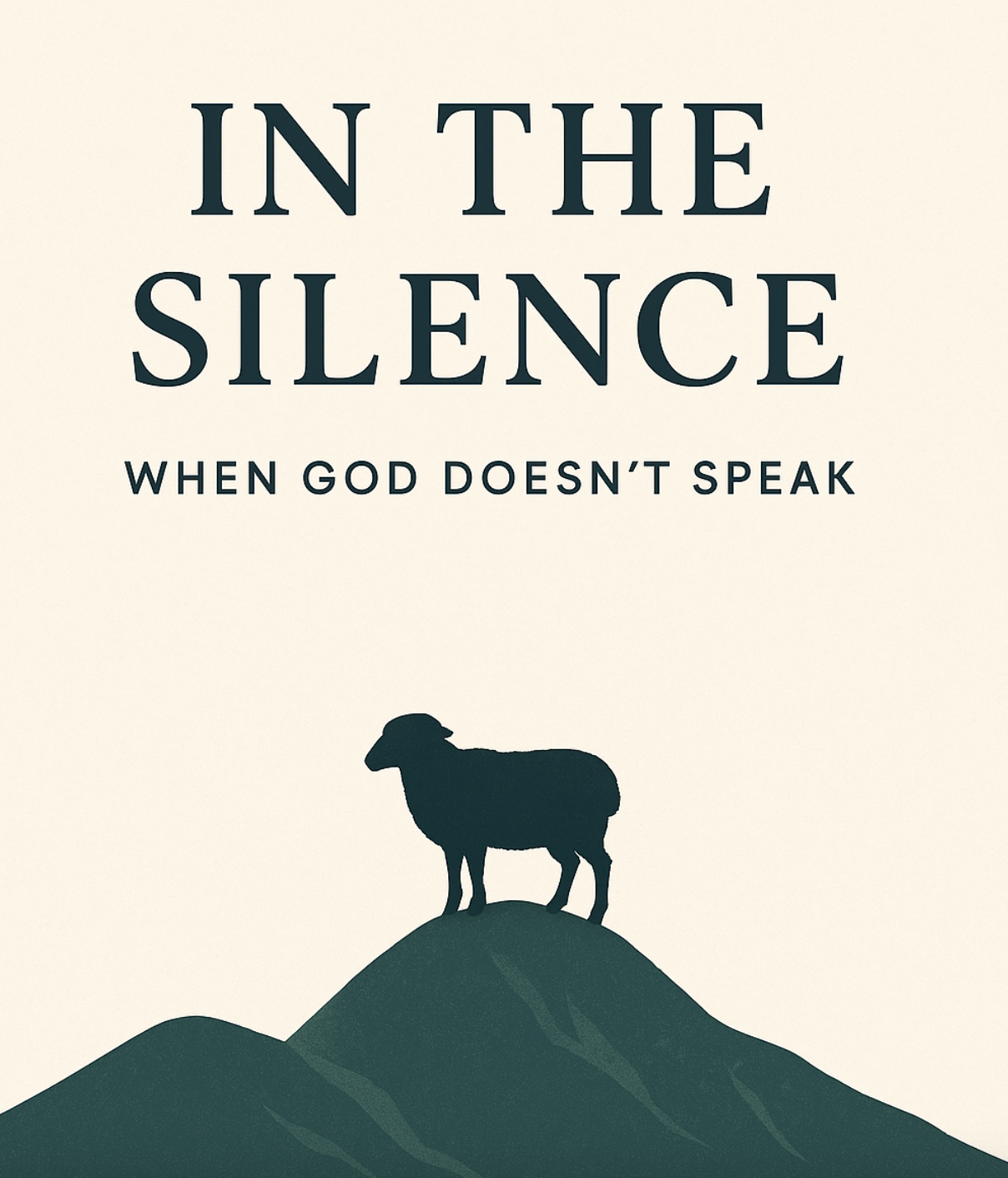
What do you do when God goes quiet?
Many believers experience seasons where prayers feel unanswered and heaven feels silent. In the Silence: When God Doesn’t Speak explores those moments honestly—through Scripture, story, and the journey of faith after failure.
If you’ve ever wondered where God is in the quiet, this book is for you.
