
This is one of the most common questions asked by believers in a season of spiritual dryness — and one of the most difficult to answer. The honest answer is: it varies enormously. But within that honest answer there is a great deal of pastoral wisdom, biblical pattern, and practical guidance that can help you navigate the uncertainty of the waiting.
Some seasons of spiritual dryness last days or weeks. Others stretch into months. Some — as the testimony of the great saints makes uncomfortably clear — can last years or even decades. The duration depends on the individual, on the nature of the dryness, on what God is accomplishing through it, and on factors that are ultimately in God's hands rather than our own.
This article does not promise a timeline. But it does offer what the biblical and Christian tradition has to say about the patterns and purposes of dryness, which can help you hold the uncertainty with more patience and more hope than raw experience alone can provide.
Why There Is No Fixed Timeline
The first thing to say honestly is that Scripture does not provide a formula for the duration of spiritual dryness. The forty-day periods in the Bible — Jesus's wilderness, Moses's encounters with God on Sinai, Elijah's journey to Horeb — have a symbolic resonance but cannot be turned into a guarantee that your dry season will end after forty days. Israel's forty years in the wilderness was the consequence of a specific act of faithlessness, not a standard season length.
The duration of spiritual dryness is governed by God's purposes for a specific person in a specific season, and those purposes are not always transparent to the person experiencing the dryness. What John of the Cross's analysis of the Dark Night suggests is that the timing is related to the work God is doing in the soul: the dryness lasts as long as the purification requires. When the work is complete — or when the soul is ready for the next stage of its journey — the season shifts.
This is not a comfortable answer if you are in the middle of a dry season and desperately want to know when it will end. But it is an honest one, and holding it honestly — alongside the genuine conviction that God's purposes are good and that the season is not permanent — may be more sustaining than a false certainty about timing.
Biblical Patterns: From Shorter to Longer Seasons
Short Seasons: Days to Weeks
Many believers experience relatively brief seasons of spiritual dryness — a few days or weeks in which prayer feels flat, Scripture seems lifeless, and the sense of God's presence is diminished. These shorter seasons are often connected to identifiable external factors: exhaustion, a bout of illness, a period of intense stress or emotional upheaval, a recent grief. As the external pressure eases, the inner life tends to recover its vitality.
These shorter seasons are not spiritually trivial — they can still feel alarming if you are not expecting them — but they are generally part of the natural rhythm of a healthy spiritual life rather than a profound spiritual crisis. The basic disciplines of continued prayer, Scripture reading, worship, and rest are usually sufficient to navigate them.
Medium Seasons: Months
More significant seasons of dryness can last months. These may be precipitated by a major life disruption — a job loss, a bereavement, a relational breakdown, a move — or by an interior shift in which the familiar forms of prayer and devotion simply seem to stop working. They may or may not be accompanied by a clear identifiable cause.
Seasons of this length often require some deliberate pastoral support — a conversation with a pastor or spiritual director, honest engagement with what the silence might mean, and a willingness to adjust spiritual practices to fit the current season rather than forcing the forms of an earlier season that no longer fit. Months of dryness can be genuinely transformative if navigated with attentiveness and honesty.
Longer Seasons: Years
Some seasons of spiritual dryness last years. This is the hardest category to speak about honestly, because it is the hardest to accept. But the testimony of the saints is clear: prolonged seasons of aridity are part of the spiritual journey for many seriously committed believers, particularly those who are called to deep interior transformation.
John of the Cross taught that the Night of the Spirit — the deeper form of the dark night — could last years, and that this duration was proportionate to the depth of purification being accomplished. Mother Teresa's interior darkness lasted approximately fifty years. Teresa of Avila's eighteen years of aridity was followed by the deepest contemplative prayer she ever experienced. The length of the season, in these cases, was not a sign of God's displeasure but of the depth of what He was forming.
Signs That a Season May Be Changing
While there is no guaranteed timeline, believers who have navigated extended seasons of dryness often describe certain signs that the season is shifting. These are not universal guarantees, but they appear often enough in the testimony of the tradition to be worth naming.
A gentle, quiet reawakening of desire — not a dramatic return of feeling, but a small stirring of something that feels like renewed longing for God, perhaps in an unexpected moment or through an unexpected means. A shift in how Scripture lands — a passage that had been flat suddenly carrying weight or warmth. A quiet sense of God's presence returning, often in unexpected forms rather than through the channels that were active before the dryness began.
The return from dryness is often quieter and more gradual than the beginning of it. The dramatic reentry into spiritual vitality that we might hope for — a sudden flood of divine presence, an overwhelming experience — is less common than a gentle, dawning awareness that something has shifted. Be attentive to the small signs as well as the dramatic ones.
What to Do While You Wait
The central counsel for believers navigating an extended season of dryness — regardless of whether it lasts weeks or years — is consistent across the tradition: wait faithfully, not passively.
Faithful waiting means continuing in the practices of faith even when they offer no immediate reward. Praying, reading Scripture, attending worship, serving others, maintaining community — all of these are acts of faithfulness in the desert that are not wasted, even when they produce no visible fruit. They are the container that God will fill when the season shifts.
Faithful waiting also means continuing to seek wisdom about what the season means. Regular conversation with a pastor or spiritual director. Honest journaling. Reading the accounts of those who have navigated similar seasons. Bringing your honest questions and frustrations to God in prayer rather than suppressing them.
And faithful waiting means holding the hope that the season will end — not as wishful thinking but as a theological conviction rooted in the character of God, who does not abandon His people permanently and whose silences, in the biblical story, always give way to renewed speech and renewed encounter. The desert is not the destination. It is the path through.
A Word to Those Who Have Been Waiting a Very Long Time
If you have been in a season of spiritual dryness for years — if you have prayed, sought pastoral care, read the classics, maintained the practices, and still find that God feels silent and faith feels empty — this section is for you.
First: you are not alone in this experience. The testimony of the saints makes clear that some of God's most treasured servants have walked in prolonged darkness. This does not make the darkness less real or less painful, but it does mean that you are not uniquely failed or uniquely abandoned.
Second: the length of the season does not determine its value or its ultimate outcome. Some of the most profound transformations in the history of Christian spirituality happened through and after the longest seasons of darkness.
Third: seek help. If you have not found a spiritual director, seek one now. If you have not spoken honestly with a pastor about what you are experiencing, do so. If there are psychological factors — depression, anxiety, unresolved grief or trauma — please pursue appropriate mental health support as an act of faithfulness to the whole person God made you. Caring for yourself in these ways is not a failure of faith; it is wisdom.
And fourth: keep holding on. You are not alone, and the darkness is not forever. Morning comes.
Related Reading
→ Why Does God Feel Silent? (Hub Article)
→ What the Saints Say About Spiritual Dryness
→ The Dark Night of the Soul Explained
→ What to Do When You Can't Hear God Anymore
Frequently Asked Questions
Is a very long season of dryness normal?
Extended seasons of spiritual dryness — lasting years — are documented in the lives of some of the most seriously committed Christians in history. While they are not the universal experience of all believers, they are not extraordinary anomalies either. For those called to a deep contemplative life or to particularly demanding forms of service, prolonged aridity seems to be a consistent feature of the journey. Your extended season, as painful as it is, is not proof that something is uniquely wrong with you.
Does the length of the season tell me anything about its cause?
Not reliably. A long season of dryness might indicate a deep purification being accomplished by God (as in John of the Cross's analysis), or it might indicate a psychological factor like depression that deserves clinical attention, or it might simply be the nature of one's particular calling and temperament. Discerning the cause is best done with the help of a wise spiritual director who can attend to the specifics of your situation.
Should I be concerned if dryness has lasted more than a year?
A year or more of sustained spiritual dryness is worth taking seriously — not as cause for alarm, but as cause for seeking pastoral and spiritual support. If you have not yet done so, engage with a spiritual director. If there are signs of clinical depression (pervasive loss of interest, sleep or appetite changes, hopelessness), seek mental health care as well. You do not have to navigate an extended season alone, and seeking support is wise and appropriate.
Can I accelerate the end of a dry season?
The tradition generally cautions against forcing an end to the dark night through spiritual heroics or intensified activity. The season ends when its purpose is fulfilled, and that timing is ultimately in God's hands. What you can do is cooperate faithfully — maintaining the practices, seeking wise guidance, remaining honest with God, and being open to the unexpected ways the season may shift. Resist the temptation to force a resolution that comes from your energy rather than God's timing.
What if I'm afraid the dryness will never end?
This fear is very common in extended dry seasons. Address it first by holding the testimony of Scripture and the saints: the pattern is consistently one of seasons that end, of silences that are broken, of deserts that give way to new life. Then address it practically by seeking pastoral support — you should not be carrying this fear alone. And address it theologically by resting on the character of God, who is faithful even when you cannot feel it.
At The Wandering Home, we believe that honesty about the difficult seasons of faith is itself a form of faithfulness. We hope this article has offered perspective and encouragement for wherever you are in the waiting.
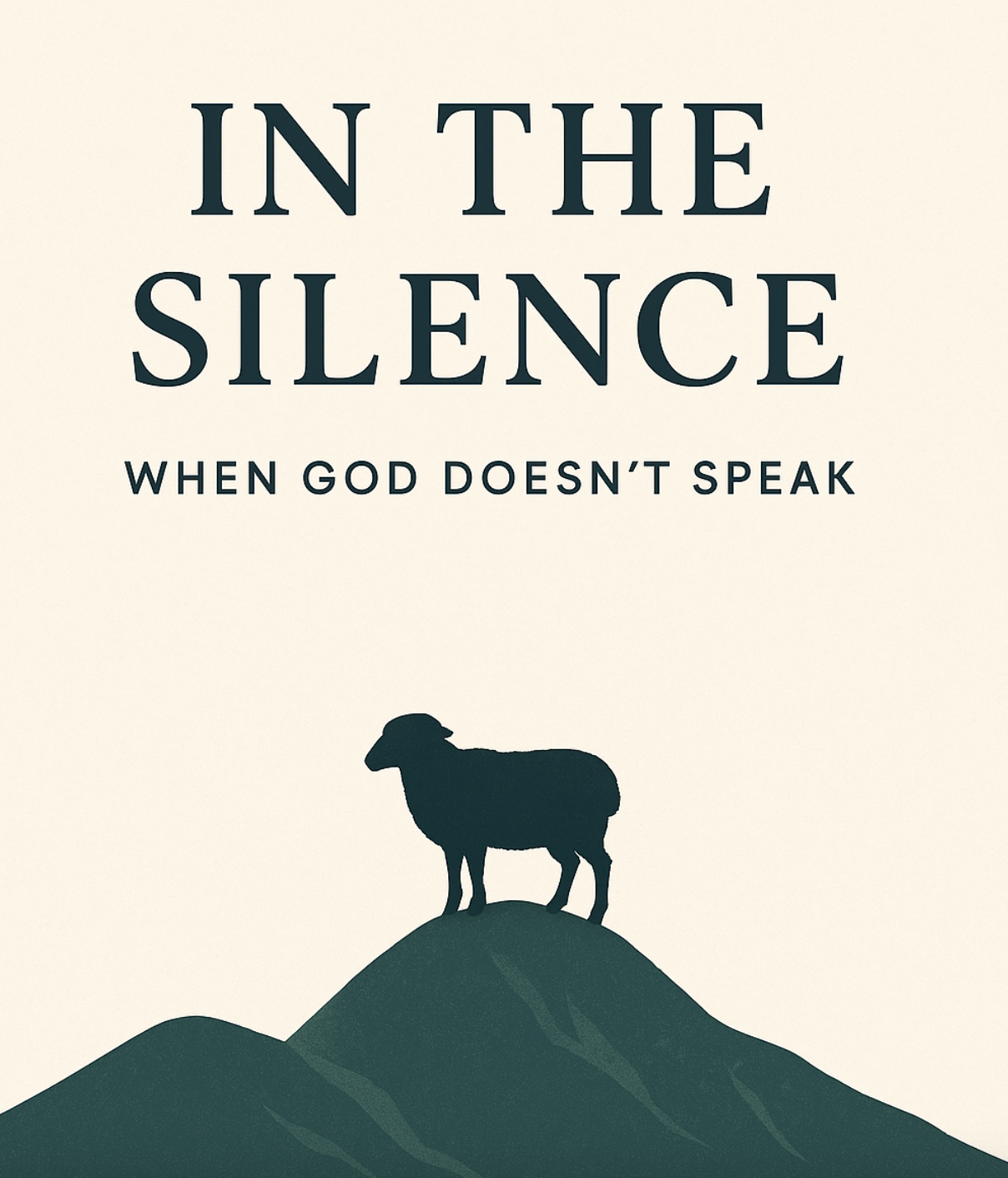
What do you do when God goes quiet?
Many believers experience seasons where prayers feel unanswered and heaven feels silent. In the Silence: When God Doesn’t Speak explores those moments honestly—through Scripture, story, and the journey of faith after failure.
If you’ve ever wondered where God is in the quiet, this book is for you.
